
TWITTER NETWORK ANALYSIS
Social Network Clustering and Centrality Analysis Using Graph Theory
Year
2023
Author
Mohamed IFQIR
Framework
NetworkX, Scikit-learn, Pandas
Project
Twitter Social Network Analysis
Category
Data mining, Data Science
Algorithms
K-means, Hierarchical clustering, Spectral clustering
Programming Languages
Python, Jupyter Notebook
Algorithm
Graph Clustering & Network Analysis
Github
Twitter Network Analyzer
License
PolyForm Non-Commercial License 1.0.0
Description
This project delves into a comprehensive analysis of social network interactions using advanced graph theory and machine learning techniques. By leveraging a Twitter dataset, the research explores complex network structures, identifying key patterns of connectivity and user characteristics through sophisticated clustering and centrality measures.
Utilizing cutting-edge data science methodologies, the project employs multiple clustering algorithms to segment network participants and analyze their interconnectedness, providing insights into social network dynamics.
Clustering Methods Used
The project utilizes three primary clustering methods:
- K-Means Clustering: A centroid-based technique that partitions the network into clusters based on similarity.
- Agglomerative Clustering: A hierarchical approach that builds clusters by iteratively merging smaller groups.
- Spectral Clustering: A graph-based technique that leverages eigenvalues of the similarity matrix for clustering.
Key Features of the Project
- Network Visualization: Created detailed graph representations of social network interactions, visualizing complex connectivity patterns.
- Clustering Analysis: Implemented K-means, Hierarchical, and Spectral clustering to segment network participants into meaningful groups.
- Centrality Metrics: Calculated degree, closeness, and betweenness centrality to identify influential nodes in the network.
- Machine Learning Integration: Applied advanced clustering techniques to understand network structure and user characteristics.
- Graph Theory Exploration: Developed comprehensive methods to analyze network topology and user interactions.
- Data Visualization: Created interactive network graphs showing cluster distributions and node relationships.
Results and discussions
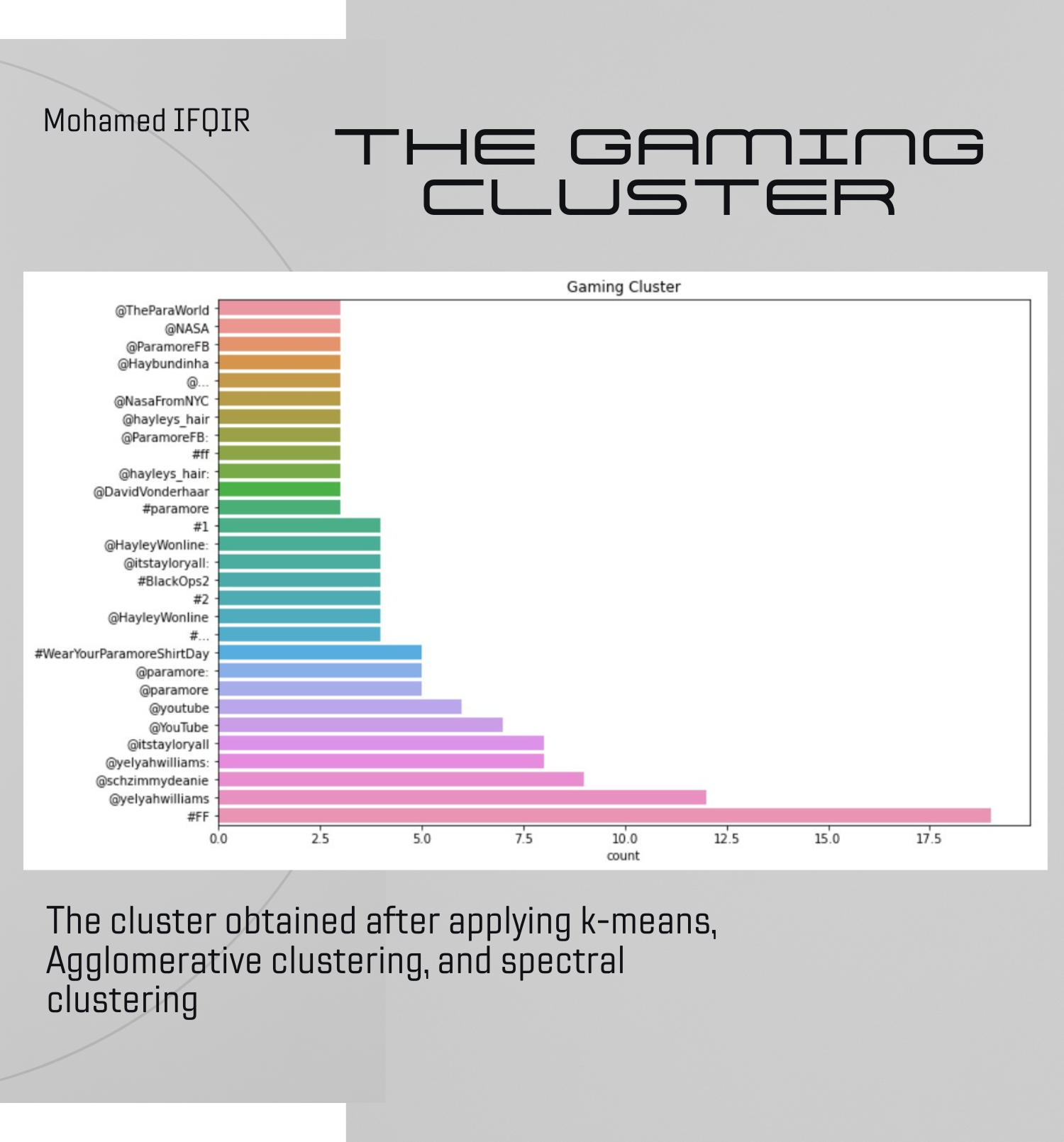
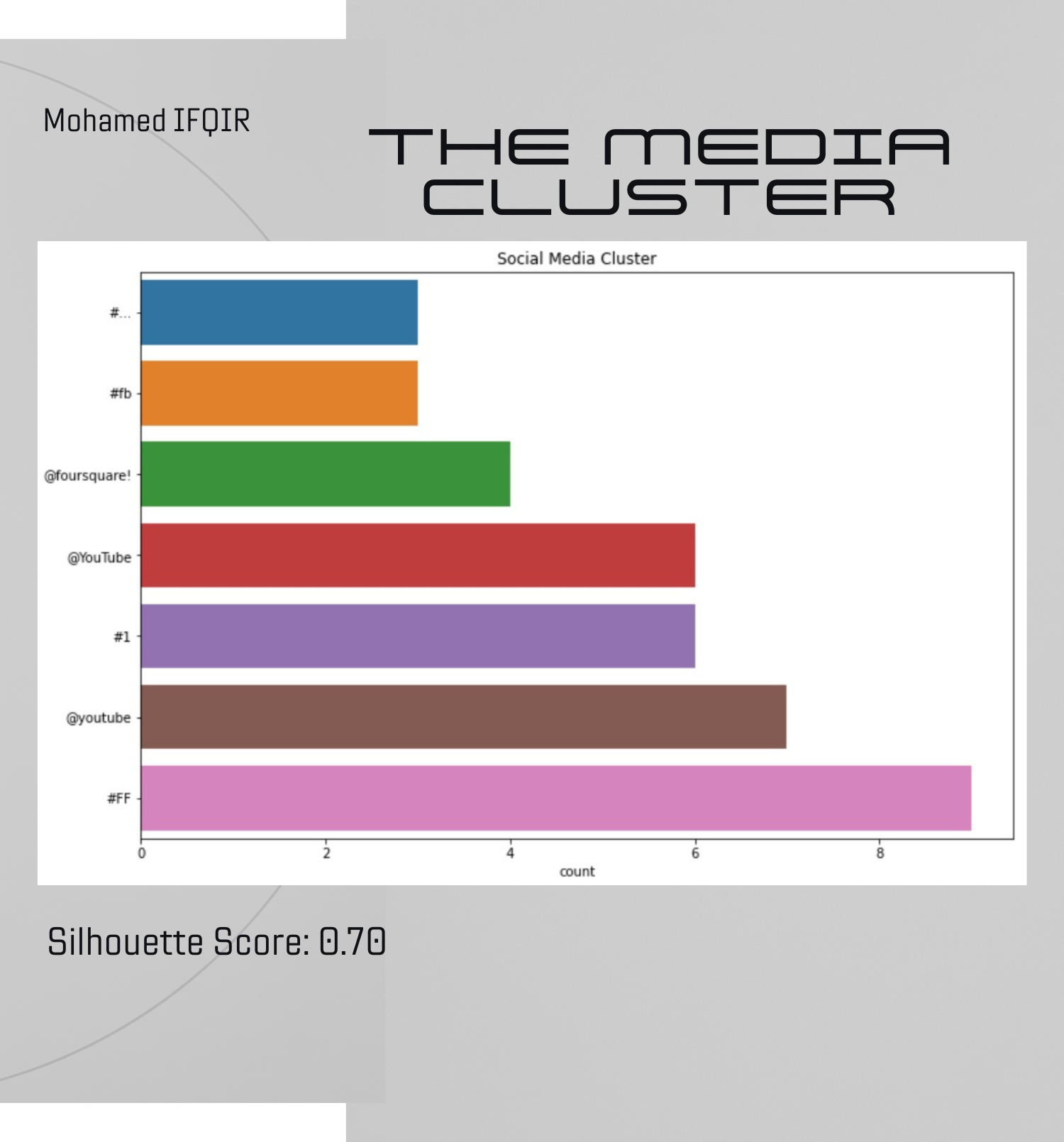
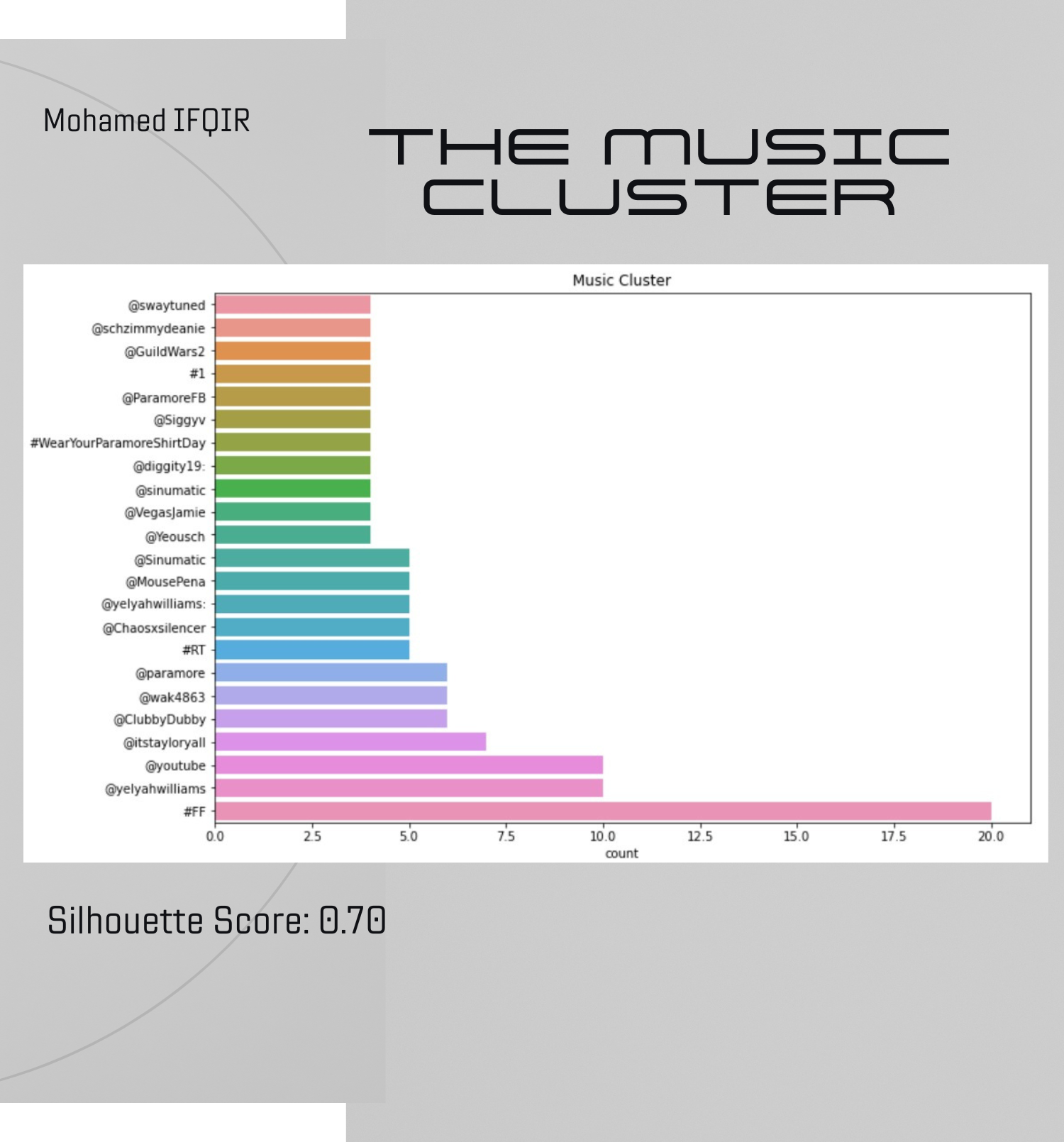
The project successfully analyzed the Twitter dataset, revealing key insights into social network dynamics and user interactions. By applying advanced clustering techniques and centrality metrics, the research identified distinct network clusters and influential nodes, shedding light on the underlying structure of the social network. The main findings include: the Gaming cluster which contains users interested in video games, video steamers, and even game dev related topics. The Media cluster, it is about all things social media related tags and social media influencers. Finally, the Music cluster includes users interested in music, artists, and music-related topics and hashtags.

Are You Ready to kickstart your project with a touch of magic and a whole lot of coding?
Reach out and let's make it happen ✨. I'm also available for full-time or Part-time opportunities to push the boundaries of Machine learning and AI.